
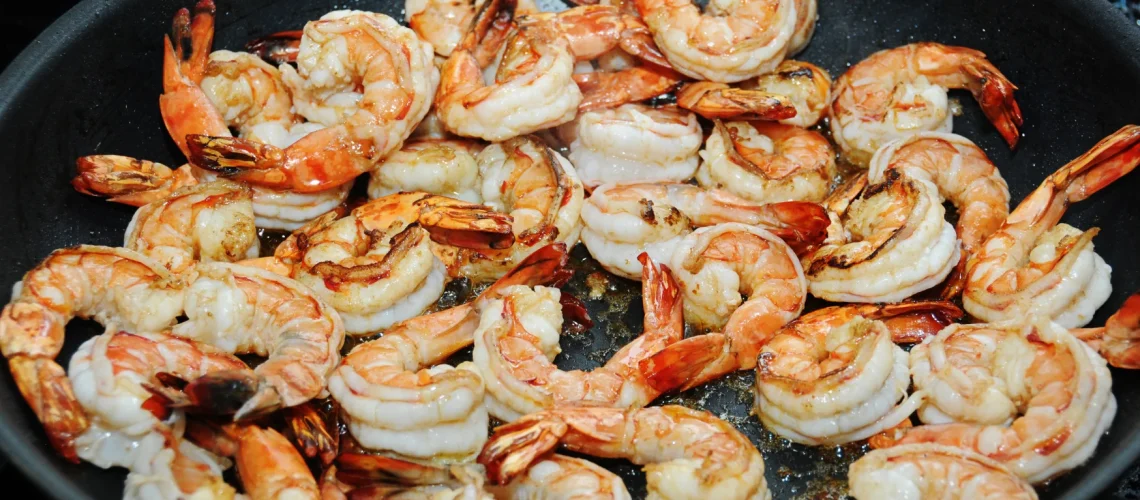
Shrimp is one of the highest protein, lowest calorie foods you can eat. It is a versatile food that works well in salads, pasta, tacos, and other meals. The macro profile is almost hard to believe until you see the numbers. Here’s the full breakdown.
Quick Answer: How Many Calories and How Much Protein Are in Shrimp?
One ounce of plain cooked shrimp contains about 28 calories and 6 grams of protein. A standard 3-ounce serving provides approximately 84 calories and 18 grams of protein, making shrimp a lean, protein-rich option.
Shrimp Nutrition at a Glance
Per 3-ounce (85g) serving of cooked shrimp:
| Nutrient | Amount |
| Calories | 84 |
| Protein | 18g |
| Total Fat | 0.9g |
| Carbohydrates | 0g |
| Sodium | 190mg |
| Cholesterol | 166mg |
How Many Calories Are in Shrimp?
Plain cooked shrimp has about 28 calories per ounce, or roughly 84 calories for a 3-ounce serving.
By preparation:
- Boiled or steamed (3oz): 84 calories
- Grilled (3oz): About 90 calories
- Cooked in butter (3oz): 150 to 180 calories
- Breaded and fried (3oz): 220 to 280 calories
The shrimp itself is very low-calorie. The cooking method is what can push the number up.
How Much Protein Is in Shrimp?
Shrimp delivers about 6 grams of protein per ounce. That puts it among the highest protein-per-calorie foods available.
By serving size:
- 6 large shrimp (about 1.5oz cooked): 9g protein, 42 calories
- 10 medium shrimp (about 2oz cooked): 12g protein, 56 calories
- 3oz cooked shrimp: 18g protein, 84 calories
- 6oz cooked shrimp: 36g protein, 168 calories
To get 36 grams of protein from ground beef, you’d need closer to 5 ounces cooked, which would run 230 to 380 calories depending on the lean percentage. Shrimp gets you there at 168.
Shrimp vs. Other Proteins
| Food (3oz cooked) | Calories | Protein |
| Shrimp | 84 | 18g |
| Chicken breast | 140 | 26g |
| Tilapia | 109 | 23g |
| Salmon | 175 | 19g |
| Scallops | 94 | 17g |
Shrimp has the lowest calorie count of the group by a significant margin.
What About Cholesterol?
Shrimp is high in dietary cholesterol: about 166mg per 3-ounce serving. Current nutritional research has shifted away from treating dietary cholesterol as a primary driver of cardiovascular risk in most people. The bigger factors are saturated and trans fat. Shrimp is very low in both. For most healthy adults, shrimp in reasonable quantities doesn’t meaningfully raise cardiovascular risk.
If your doctor has specifically told you to watch dietary cholesterol, it’s worth discussing with them.
Practical Uses
Because shrimp cooks in 2 to 3 minutes and has almost no fat, it’s easy to add protein to a meal without much planning. A bag of frozen shrimp thaws in 15 minutes in cold water, cooks in 3, and adds 18 to 36 grams of protein to whatever you’re making with almost no additional calories.
Stir-fry, grain bowls, tacos, pasta, and salads all work well with shrimp as the protein source.
Final Thoughts
Shrimp delivers a substantial amount of protein without adding many calories, carbohydrates, or fat. Boiling, steaming, or grilling helps preserve its naturally lean nutrition profile, while butter, breading, and frying can significantly increase the calorie count. It works well in salads, tacos, pasta, grain bowls, and other meals that need a quick source of protein. Explore more practical nutrition guides and healthy meal ideas from Super Natural Eats.