
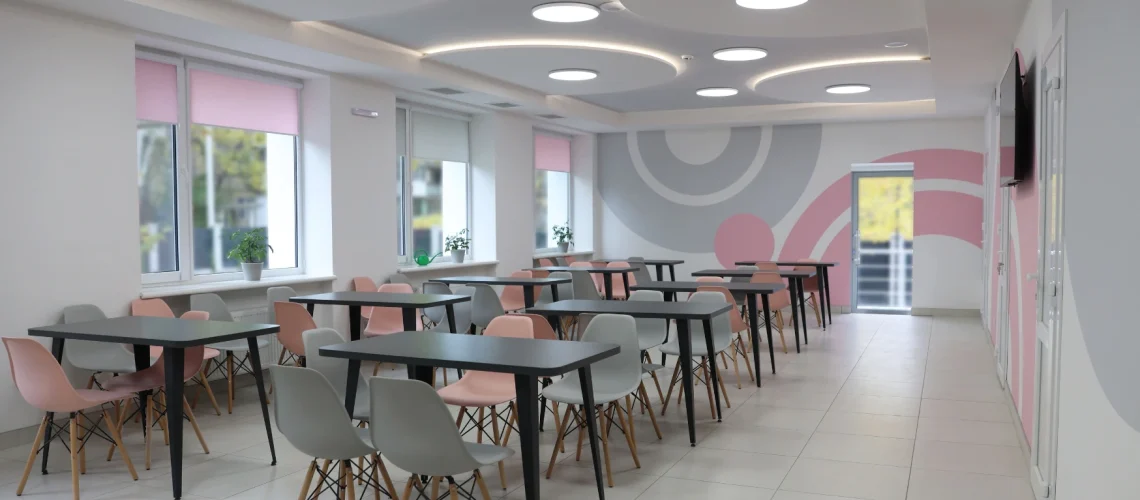
From corporate campuses to healthcare systems and schools, institutional spaces are rethinking what employee and resident amenities should look like today. Many workplaces are moving beyond vending machines and forgettable takeout, and expectations for on-site dining keep rising. Today, a well-run on-site dining program can support productivity and retention, and in some settings, it can also contribute to better nutrition outcomes.
Building a cafeteria in a high-volume setting comes with added complexity, especially around compliance, scale, and staying on budget. This guide walks you through practical phases that can help you launch a modern dining program in 2026, without guessing your way through compliance, infrastructure, and day-to-day operations.
Quick Answer: Adding an Office Cafeteria in 2026
The strongest cafeteria programs start with perfecting a few basics up front. Start with compliance, make sure the space and utilities can actually support a commercial kitchen, and loop in an experienced operator early. In a lot of cases, outsourcing to an established institutional food service provider takes a big chunk of the daily workload off your plate and can make compliance easier to manage.
Phase I: Strategic Assessment and Compliance Pre-Check
Launching an institutional dining program is a real investment, both in build-out dollars and ongoing operations. Once you factor in utilities, permits, equipment, and staffing, the costs add up fast. Before you finalize blueprints or sign vendor agreements, do the upfront diligence so you’re clear on scope, feasibility, and the operational realities you’ll be managing every day.
Determining the Scope of Service
Start by defining what you’re actually building. Is this a weekday lunch program for 500 office employees, or a compliant, around-the-clock meal service for thousands of residents in a healthcare or correctional facility? Scope determines everything: equipment, staffing, service hours, and which permits and inspections apply. Get clear on volume and service speed first, then set practical nutrition goals that match your population and budget, like more produce options or lower-sodium defaults where it makes sense.
The Facility Feasibility Audit
A common mistake is assuming the existing space is “close enough,” then discovering late-stage upgrades are required for utilities, ventilation, and code compliance. A professional feasibility audit prevents expensive surprises. It’s not just about square footage; it’s about whether your back-of-house can handle real production.
- Electrical Load: Confirm your electrical capacity can support commercial-grade cooking equipment.
- HVAC and Ventilation: Make sure your hood system and make-up air are designed to meet mechanical and fire code requirements for grease, smoke, and heat.
- Plumbing and Waste Management: Verify grease interceptors are correctly sized, installed, and maintained per local requirements, and confirm water supply can handle peak prep and dish demand.
Find the gaps early and you’ll reduce delays, change orders, and budget surprises during build-out and ramp-up.
Phase II: Navigating Regulatory and Nutritional Standards
In institutional settings, dining isn’t “just food.” It’s a regulated operation with documented standards for safety, sanitation, and often nutrition. If you serve government sites, schools, or clinical populations, requirements can shift with contracts, updated standards, or public health guidance. Your program needs to be built to adapt without breaking.
Adhering to Specialized Dietary Mandates
Compliance is one of the biggest operational burdens in institutional food service because it touches menus, sourcing, training, documentation, and daily execution. If the facility operates under government-funded programs or serves clinical populations, menus often need to align with external standards such as USDA school meal requirements or therapeutic diets ordered by clinical teams.
Allergen tracking, nutrient targets where required, and strong cross-contamination controls are essential in institutional kitchens. Doing this in-house requires ongoing staff training and consistent internal checks, and depending on the setting it may also involve specialized credentials and audits that can stretch teams without dedicated food service expertise.
Designing the Menu for Volume and Velocity
A strong institutional menu balances what people want to eat with what the kitchen can reliably produce at scale. “Healthy and fresh” doesn’t have to mean expensive or chaotic. With smart planning, you can reduce waste, stabilize purchasing, and keep service consistent.
- Supply Chain Stability: Supply chain stability improves when you build redundancy with vetted suppliers, including regional partners when practical, so quality and volume stay consistent even when markets get choppy.
- Ingredient Versatility: Use cross-utilized ingredients to simplify inventory, reduce spoilage, and keep purchasing predictable.
- Nutrient Density per Dollar: Design meals that hit nutrition goals while still meeting cost-per-meal targets set by procurement and contract requirements.
Phase III: The Procurement and Partnership Decision
For most institutions, the cafeteria decision becomes a build-versus-partner question. Your staffing capacity, compliance burden, and budget model usually determine the right answer. Because high-volume dining has real operational risk, many organizations choose a professional partner (like us) instead of building a full department internally.
The Build vs. Buy Dilemma: Operational Complexity
Running food service in-house often means building specialized roles you don’t currently have: culinary leadership, menu and nutrition oversight (when required), inventory control, and food safety management. That creates real administrative overhead and added risk tied to turnover, food safety exposure, and missed compliance requirements.
Partnering with an established provider shifts much of the daily operational weight off your team while you keep oversight and accountability. As an operating partner, we handle staffing, training, execution, and vendor coordination, while you maintain control through documented standards, reporting, and performance expectations.
Phase IV: Implementation and Operational Scaling
Once the strategy and partnership are finalized, the focus shifts to reliable day-to-day execution and smooth integration with your facility’s routines.
Technology Integration and Seamless Transactions
Cash-only service is less common now, but some populations still require cash acceptance or a clear cash alternative. Beyond that, modern institutional dining runs smoother with the right tech, especially for faster checkout, better reporting, and predictable cost tracking. A practical stack usually includes:
- Point-of-Sale (POS) Systems: Fast, reliable terminals that handle badge deductions, subsidy tracking, and standard payment methods.
- Inventory Management: Daily or real-time tracking that reduces spoilage, supports smarter ordering, and protects budget targets.
- Data Reporting: Simple dashboards and reports that show demand, waste trends, and budget performance so you’re managing with numbers, not hunches.
In high-volume settings, line speed matters. The right system reduces wait times and prevents avoidable admin mistakes.
Final Thoughts on Moving Beyond the Cafeteria Concept
Adding an office cafeteria in 2026 is a strategic move, and it works best when it’s treated like the operational system it is. You’re not just serving food. You’re managing safety, timing, staffing, inventory, and consistency at scale, every single day. With the right infrastructure planning and experienced operators, you can build a program that supports your people and your nutrition goals without building every process from scratch.If you want an on-site cafeteria that runs safely, stays compliant, and works smoothly at scale, partner with Super Natural Eats to plan, launch, and operate it with clear standards and steady execution.