
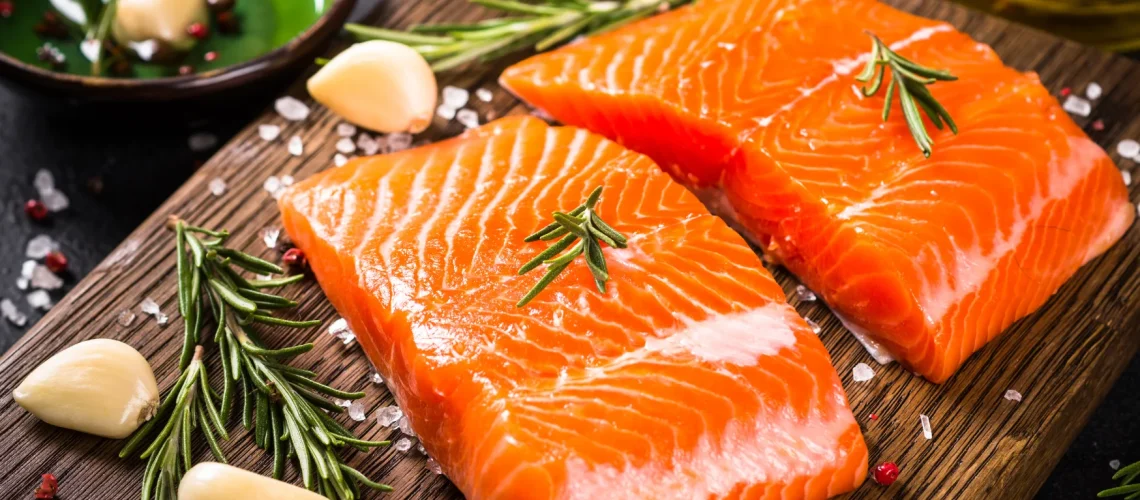
Salmon is one of the most nutrient-dense foods you can eat. It’s high in protein, loaded with omega-3 fatty acids, and calorie-dense in a way that supports both muscle building and satiety. Here’s a complete breakdown.
Quick Answer: How Many Calories and How Much Protein Are in Salmon?
A 4-ounce (113-gram) raw, farm-raised Atlantic salmon fillet contains approximately 235 calories and 23 grams of protein. It also provides about 15.2 grams of total fat and roughly 2 grams of EPA and DHA omega-3 fatty acids. Exact nutrition values vary by salmon species, portion size, whether the weight is measured before or after cooking, and any oil, butter, sauce, or breading added during preparation.
Salmon Nutrition Facts at a Glance
Per 4-ounce (113g) raw, farm-raised Atlantic salmon fillet:
| Nutrient | Amount |
| Calories | 235 |
| Protein | 23g |
| Total Fat | 15.2g |
| Saturated Fat | 3.5g |
| Omega-3 Fatty Acids | 2.0g |
| Carbohydrates | 0g |
| Sodium | 67mg |
How Many Calories Are in Salmon?
A 4-ounce raw, farm-raised Atlantic salmon fillet has approximately 235 calories, although the amount varies among salmon species. Cooking changes the salmon’s moisture and final weight, while added oil, butter, breading, or sauce can increase total calories, so raw and cooked serving weights should be clearly distinguished.
- Baked or grilled salmon (4oz): A 4-ounce cooked salmon portion can contain roughly 155 to 235 calories before added cooking fat, depending on the salmon species.
- Pan-seared salmon (4oz): The total varies by salmon species and the amount of butter or oil used, so include the added cooking fat when calculating calories.
- Poached salmon (4oz): A 4-ounce poached salmon portion may contain roughly 175 to 235 calories before sauce or added fat, depending on the species and final cooked weight.
A typical restaurant portion is 6 to 8 ounces. At 6 to 8 ounces, cooked salmon may contain approximately 235 to 470 calories before sides, sauces, or added cooking fat, depending on the species.
How Much Protein Is in Salmon?
A 4-ounce raw, farm-raised Atlantic salmon fillet provides about 23 grams of protein. That makes salmon a high-protein food that is comparable to chicken breast by weight, although lean fish such as cod and tilapia generally provide more protein per calorie because they contain less fat.
By cooking method:
- 4oz baked salmon: A 4-ounce cooked salmon portion provides approximately 25 to 30 grams of protein, depending on the species, and the serving should be identified as cooked weight.
- 3oz canned salmon: About 17 to 20g of protein, depending on the species and whether the serving includes liquid or is drained.
- 6oz grilled fillet: A 6-ounce cooked salmon fillet provides approximately 38 to 45 grams of protein, depending on the species.
For context, the Recommended Dietary Allowance for healthy adults is 0.8 grams of protein per kilogram of body weight per day, while sports-nutrition guidance generally recommends about 1.4 to 2.0 grams per kilogram for most exercising individuals. A 6-ounce salmon fillet covers a substantial part of that target in one meal.
Salmon vs. Other Proteins
Farm-raised Atlantic salmon has more calories than cooked tilapia and lean chicken breast by equal cooked weight because it contains more fat, although calorie content varies across salmon species and preparation methods; salmon also provides EPA and DHA.
Wild vs. Farmed Salmon
Wild-caught salmon is generally leaner than farmed. Using current USDA data, a 4-ounce raw wild sockeye salmon portion contains approximately 148 calories and 25 grams of protein. Raw farm-raised Atlantic salmon is generally higher in calories than wild sockeye because the USDA comparison shows that it contains substantially more total fat.
Both are excellent sources of protein and omega-3s. The main difference is calorie and fat content.
How to Get More Out of a Salmon Meal
Salmon on its own is protein-rich but low in carbohydrates. For a balanced meal, pair it with a complex carb (rice, quinoa, roasted sweet potato) and a vegetable. That combination gives you sustained energy alongside the protein hit.
Keeping preparation simple preserves the nutritional profile. A simply seasoned fillet may contain fewer added calories than a heavily sauced dish, but the difference depends on the amounts of oil and sauce used; protein is mainly determined by the fish portion, while cooking method and culinary fat can affect its final fatty-acid composition.
Final Thoughts: Is Salmon a Nutritious Protein Choice?
Salmon is a filling, protein-rich food that also provides beneficial omega-3 fatty acids. A 4-ounce raw, farm-raised Atlantic salmon portion supplies about 23 grams of protein, making it a practical option for balanced meals and meeting daily protein needs.
Calories can vary considerably between wild and farm-raised salmon and between raw and cooked portions. For the most accurate estimate, check the species, measure the serving size, and include any cooking fats or sauces in the total.
Looking for more straightforward nutrition information? Explore the latest food and nutrition guides from Super-Natural Eats to make more informed meal choices.